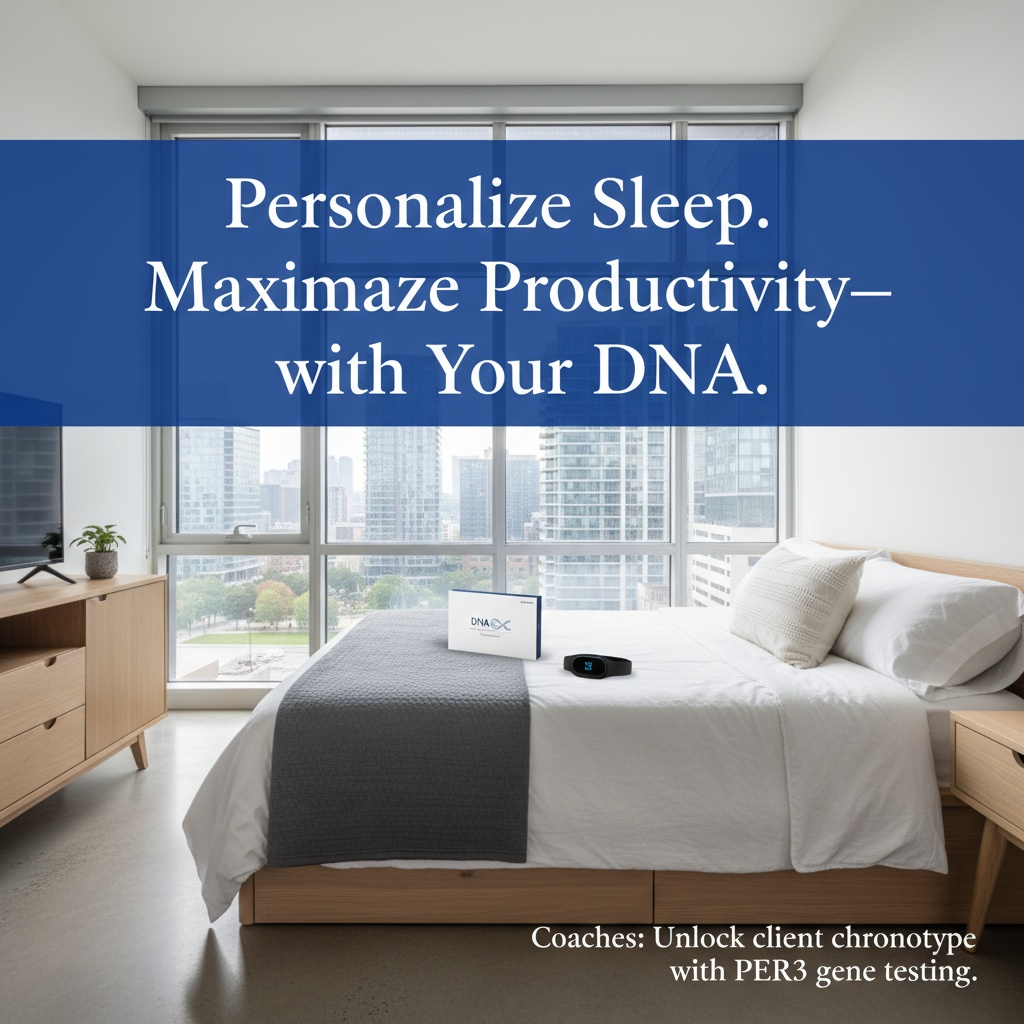
How Can Health Coaches Leverage the PER3 Gene for Personalized Sleep Optimization?
What if unlocking better sleep—and by extension, enhanced daytime productivity—began not in the bedroom but in your clients’ DNA? Urban professionals are increasingly turning to precision health and genetic testing to move past trial-and-error wellness routines. For health coaches, advances in pharmacogenomics and nutrigenomics, especially the understanding of circadian rhythm genes like PER3, open the door to a more targeted, effective approach to sleep optimization.
Scylex Lab offers coaches and healthcare pros the ability to access actionable genetic data—making it easier to guide clients toward their optimal bedtime, exposure to light, and daily rhythms. This blog explains how understanding the PER3 gene and chronotype can be the missing piece in a gene-based wellness plan that truly maximizes productivity and recovery.
What Are Circadian Rhythm Genes and Why Is the PER3 Gene Important?
Circadian rhythm genes, including the PER3 gene, control our internal clocks, influencing sleep timing, alertness, and metabolic function. The PER3 gene plays a critical role in determining whether someone is a natural “morning lark” or “night owl.”
Circadian biology refers to the physical, mental, and behavioral changes that follow a roughly 24-hour cycle and respond to light and darkness in an organism’s environment. The PER3 gene is one of several “clock genes” that regulate these rhythms. Studies have found specific variants in the PER3 gene are linked to different sleep patterns and preferred activity times—helping to distinguish chronotypes:
- People with certain PER3 variants feel most alert in the morning and tire earlier at night (morning larks). - Others with alternative variants peak later in the day (night owls).
Understanding a client’s genetic sleep profile provides a foundation for creating schedules and routines that honor biological predispositions, which current research suggests boosts productivity, mood, and health outcomes. Learn more about the PER3 gene’s role in sleep patterns.
How Does DNA Testing for Sleep Chronotype Work?
DNA testing identifies a client’s PER3 (and other clock gene) variants, enabling evidence-based recommendations about their optimal sleep-wake cycle.
Modern genetic testing for lifestyle, such as the solutions from Scylex Lab and other providers, uses a simple cheek swab to analyze genes like PER3. The results indicate whether a client has a higher propensity for morningness or eveningness.
Key components reported include: - Genotype at PER3 and related circadian genes. - Predicted chronotype (morning, intermediate, or evening preference). - Evidence-based recommendations for sleep timing, light exposure, and recovery routines.
This empowers health coaches to develop highly personalized health optimization strategies, moving beyond generalized advice to gene-based routines. Adoption of such testing is growing in urban US centers where consumers demand personalized wellness solutions. See an example of a genetic sleep test analyzing the PER3 gene.
How Can Health Coaches Use Genetic Sleep Insights to Maximize Clients’ Daytime Productivity?
By aligning clients’ schedules with their genetic chronotype, coaches can optimize sleep quality, energy cycles, and recovery, driving improved focus and lowered risk of burnout.
Sleep and productivity are deeply interconnected. According to studies published in the Journal of Sleep Research, matching work routines to one’s chronotype leads to:
- Increased alertness and cognitive performance during peak times. - Reduced risk of mood disorders and chronic fatigue. - Better recovery and adaptation from exercise or stressful events.
Practical steps for health coaches: 1. Interpret reports: Explain to clients what their genetic sleep profile means in plain language. 2. Adjust routines: Tailor bed, wake, and activity times to genetic findings. 3. Implement light exposure protocols: Advise on morning or evening light therapy based on chronotype to reinforce optimal rhythms. 4. Monitor progress: Use sleep tracking alongside DNA insights for continuous improvement.
Coaches in urban US markets are uniquely positioned to deliver this personalized recovery and performance framework, leveraging the high demand for novel wellness solutions among professionals, athletes, and biohackers.
What Are the Benefits of Integrating Genetic Testing into Sleep and Lifestyle Coaching?
Genetic testing reduces trial and error, increases client engagement, and builds trust through science-backed personalization.
Integrating genetic testing for sleep and chronotype benefits both coaches and clients by:
- Providing actionable insights for individualized health decisions. - Enhancing motivation by validating clients’ experiences (“there’s a reason you’ve never been a morning person!”). - Facilitating better long-term adherence to recommended routines. - Enabling tailored nutrition and pharmacogenomics support, since sleep cycles influence medication metabolism and dietary needs.
By moving toward gene-based wellness plans, coaches deliver measurable improvement in client outcomes. Scylex Lab supports this by translating complex genomics into simple, client-friendly reports, making precision health practical and actionable.
How Can Urban Health Coaches Stay Ahead in the Era of Personalized Health Optimization?
Stay informed about circadian biology research, invest in tools like Scylex Lab’s testing, and offer gene-based coaching as a core service.
With a rapidly growing market for DNA-driven health solutions, coaches serving urban US populations must continually update their knowledge and services. Best practices include:
- Partnering with credible pharmacogenomic and nutrigenomic labs. - Providing educational resources that demystify genetic results. - Delivering ongoing support—combining genetic, behavioral, and environmental data for holistic wellness planning.
Urban consumers expect innovation, evidence, and convenience. Genetically-informed coaching fulfills this expectation, positioning your service at the forefront of health optimization trends. Read more about adoption rates and trends in personalized medicine.
Leveraging circadian rhythm genes—especially the PER3 gene—enables health coaches to transform sleep coaching from generic advice into a personalized, science-backed process. Through DNA testing, coaches can precisely tailor sleep routines, nutrition, and recovery strategies for maximum productivity and wellbeing.
Ready to help your clients unlock better sleep and productivity through genetic insights? Partner with Scylex Lab to integrate advanced DNA testing into your coaching practice. Empower your clients with precision health and deliver the results they deserve!