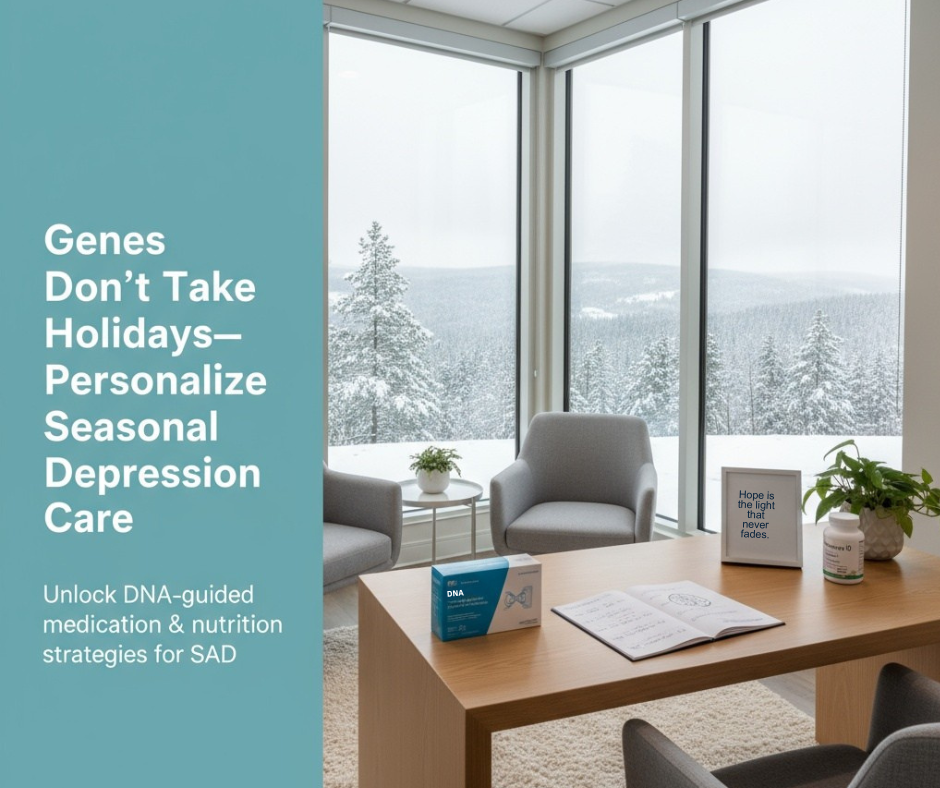
Can your patients’ genes unlock a more effective approach to seasonal affective disorder? Psychiatric nurse practitioners and psychiatrists know the return of shorter days often brings a surge in seasonal depression. But what if there were a way to predict—before prescribing—exactly which treatment might work best for each individual?
This is no longer a hypothetical. Thanks to advances in pharmacogenomics, we can now leverage genetic insights to personalize both medication and nutrition plans for those struggling with SAD. For US-based clinicians seeking precision in mental health care, DNA-guided choices are creating a new frontier in patient safety and efficacy.
What Is Seasonal Affective Disorder and Who Is Affected?
Seasonal Affective Disorder (SAD) is a mood disorder characterized by recurrent episodes of depression in fall and winter. The reduced daylight disrupts circadian rhythms, neurotransmitter balance, and overall well-being. In the USA, around 5% of adults experience SAD, with higher prevalence in northern states and regions with less winter sunlight [source].
How Does Pharmacogenomics Influence Depression Treatment?
Pharmacogenomics combines pharmacology and genomics to study how individual genetic differences affect drug response. For psychiatric medications—particularly SSRIs, SNRIs, and other antidepressants—pharmacogenetic testing can:
- Identify variations in CYP450 enzymes (e.g., CYP2C19, CYP2D6), which impact drug metabolism
- Predict risk for side effects and non-responsiveness
- Inform dosage adjustments and alternative therapy options [source]
Personalized medication strategies minimize trial-and-error, reduce adverse effects, and improve outcomes—a critical advantage during the vulnerable SAD season.
Can Genetic Testing Improve Outcomes for SAD Patients?
Yes. Genetic testing enables clinicians to select antidepressants or adjunct therapies with greater precision, reducing the burden of ineffective or poorly tolerated medications during peak SAD episodes.
Recent US-based research underscores the value of integrating pharmacogenomics for mood disorders. A growing body of evidence links single nucleotide polymorphisms (SNPs) in genes like SLC6A4 and BDNF—not just classic CYP450s—to differential antidepressant efficacy in SAD and major depression [source]. With the expected growth of the SAD treatment sector at a 5% CAGR through 2033, clinicians who deploy genomics gain a competitive edge in care quality [source].
What Role Does Nutrigenomics Play in Managing SAD?
Nutrigenomics analyzes how genes influence nutritional needs and metabolic response to micronutrients. For patients with SAD:
- Vitamin D metabolism is especially relevant, as some individuals have genetic variants (e.g., in the VDR gene) that hamper Vitamin D absorption, compounding depressive symptoms.
- Omega-3 fatty acid pathways and folate metabolism variants may affect neurotransmitter synthesis and mood regulation.
Genetic testing can reveal at-risk individuals who may benefit from targeted supplementation or diet modifications to support neurochemical stability throughout the winter months [source].
How Does Pharmacogenomics Support Medication Safety and Efficacy?
Pharmacogenomic data significantly mitigates the risk of drug-drug interactions—crucial for SAD patients often on multi-drug regimens (e.g., antidepressants, sleep aids). Clinicians can:
- Avoid ineffective treatments based on poor metabolizer status
- Monitor for high-risk side effects in patients with known gene-drug interactions
- Optimize polypharmacy, tailoring each agent to the patient’s DNA blueprint [source]
What Should Clinicians Consider When Implementing Genetic Testing?
Choose reputable genomic testing companies offering clinically validated panels for both pharmacogenomics and nutrigenomics—ideally, those with expert support for interpretation and integration into EHRs.
Review consent and privacy protocols (HIPAA), reimbursement models, and evidence-based guidelines (e.g., CPIC, FDA tables) to ensure tests add value and support precision health standards. When consulting with a precision health company, look for:
- Validated panels covering CYP450s, SLC6A4, BDNF, VDR, MTHFR, and others
- Integration guides for psychiatric nurse practitioners’ workflows
- Continuous updates aligned with the latest psychiatric pharmacogenomics research
Are There Barriers and Solutions to Widespread Pharmacogenomics Adoption in Psychiatry?
Adoption of pharmacogenomics in psychiatric practice, including SAD treatment, remains challenged by insurance coverage limitations, gaps in provider education, and EHR integration hurdles. However, the field is rapidly progressing as professional guidelines strengthen and more US clinics demonstrate value through real-world studies [source].
Education, streamlined reporting, and growing patient demand for personalized care are accelerating mainstream use.
Seasonal affective disorder is more than just “winter blues”—and for psychiatric nurse practitioners and psychiatrists, pharmacogenomics offers a transformative approach to personalized, safer, and more effective care. Leveraging a patient’s DNA for both medication and nutrition choices maximizes recovery opportunities during the challenging SAD months.
Ready to elevate your practice with pharmacogenomics and nutrigenomics? Partner with our precision health experts to personalize your SAD treatment protocols—empower your patients to thrive, season after season. Contact us today for a consultation or request your clinician starter kit. https://www.scylexlab.com/schedule